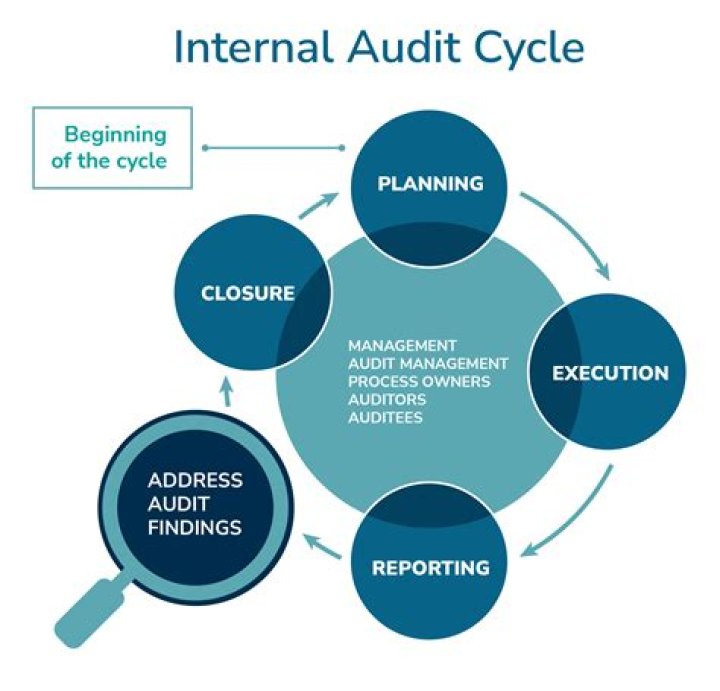
The auditor has a responsibility to plan and perform the audit to obtain reasonable assurance about whether the financial statements are free of material misstatement, whether caused by error or fraud.
What is meant by audit committee who are its members and what are its responsibilities?
An audit committee is made of members of a company’s board of directors and oversees its financial statements and reporting. Per regulation, the audit committee must include outside board members as well as those well-versed in finance or accounting in order to produce honest and accurate reports.
What the responsibilities of the audit committee to ensure corporate governance are?
The audit committee operates as a representative of the board of directors from whom it receives its powers to perform its corporate governance responsibilities which include overseeing and monitoring the organization’s financial reporting, disclosure, internal and external audit, internal control, regulatory …
What is the role of the audit committee what are the two most important characteristics of an effective audit committee?
The committee is tasked with providing oversight to management as it executes the company’s strategic plans, in particular focusing efforts on areas that involve managing risks (e.g., operational, business interruption, cybersecurity, financial reporting, fraud, regulatory, etc.), ensuring compliance, establishing …
What is audit evidence and examples?
Auditing evidence is the information collected by an auditor to ascertain the accuracy and compliance of a company’s financial statements. Examples of auditing evidence include bank accounts, management accounts, payrolls, bank statements, invoices, and receipts.
What is the role of an audit and risk committee?
The committee should assist the board in carrying out its functions relating to the safeguarding of assets, the operation of adequate risk management and control processes and the preparation of financial statements in compliance with all applicable legislation and regulations, and the oversight of the external and …
What is meant by audit committee?
An audit committee is a sub-group of a company’s board of directors responsible for the oversight of the financial reporting. Internal financial and disclosure process. To be successful, the audit committee should be aware of the processes and internal controls in the organization.
Which of the following is not responsibility of audit committee?
Which of the following is not a responsibility of audit committees? Relations with the independent auditor.
What is a successful audit committee?
An effective audit committee isn’t simply one which checks that it is compliant with relevant codes and regulations – it is one which is focused upon organisational risk, ensuring assurance meets organisational need, and challenging both the reports of management and auditors to ensure that assurance is robust.
What are the roles of Management and the Audit Committee?
The audit committee, management, and the independent auditor all have distinct roles in financial reporting. Management is responsible for preparing the financial
What is the role of the SEC Audit Committee?
Foreign private issuers and small business issuers will have additional time to comply. In July 2015, the SEC voted to publish a concept release seeking public comment on audit committee disclosure requirements, focusing on the committee’s oversight of independent auditors.
What are the requirements for an audit committee?
, the US Securities and Exchange Commission (SEC) adopted rules and requirements that a company needs to fulfill to get its securities listed on a national exchange. The requirements include the following: The audit committee must consist of independent members.
Why do you need an independent audit committee?
Independence is needed to prevent insiders from influencing the work and oversight of the committee and the work of the external auditors. Companies operating in specialist niches should have to meet the same audit committee disclosure and structure requirements as companies operating in more traditional markets.