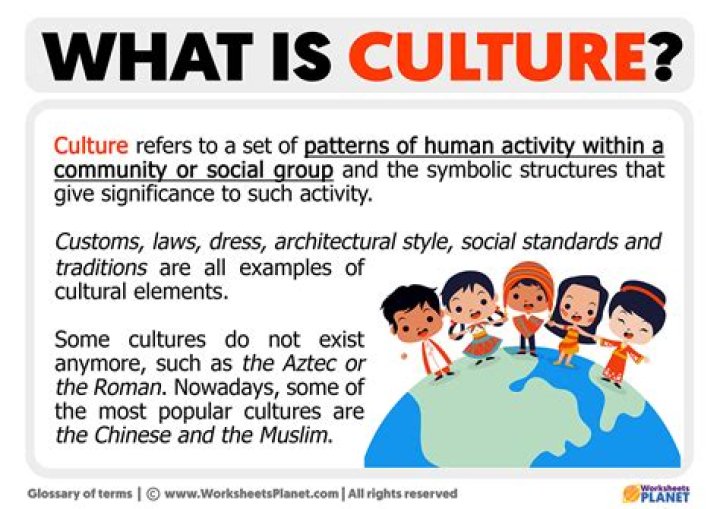
Culture has five basic characteristics: It is learned, shared, based on symbols, integrated, and dynamic….All cultures share these basic features.
- Culture is learned.
- Culture is shared.
- Culture is based on symbols.
- Culture is integrated.
- Culture is dynamic.
Is culture an innate?
Since culture is non-instinctive, we are not genetically programmed to learn a particular one. Every human generation potentially can discover new things and invent better technologies. The new cultural skills and knowledge are added onto what was learned in previous generations. As a result, culture is cumulative.
What are the 7 characteristics of culture?
Characteristics of Culture:
- Learned Behaviour: ADVERTISEMENTS:
- Culture is Abstract:
- Culture is a Pattern of Learned Behaviour:
- Culture is the Products of Behaviour:
- Culture includes Attitudes, Values Knowledge:
- Culture also includes Material Objects:
- Culture is shared by the Members of Society:
- Culture is Super-organic:
What are the 10 characteristics of culture?
What are the 10 characteristics of culture?
- Learned Behaviour:
- Culture is Abstract:
- Culture is a Pattern of Learned Behaviour:
- Culture is the Products of Behaviour:
- Culture includes Attitudes, Values Knowledge:
- Culture also includes Material Objects:
- Culture is shared by the Members of Society:
- Culture is Super-organic:
What are the four models of culture?
(As shown in diagram above.) Based on these parameters, the framework breaks organizational cultures into four distinct quadrants or cultural types: The Clan Culture, the Adhocracy Culture, the Market Culture, and the Hierarchy Culture.
Why is culture not innate?
Culture is learned (not born), shared (not personal), action, it is shared by groups of people, giving them “lifestyle”, culture has abstraction and material aspects includes. In other words, culture is imitation, education, and learning behavior inherited through role model.
What are three examples of material culture?
Material culture, tools, weapons, utensils, machines, ornaments, art, buildings, monuments, written records, religious images, clothing, and any other ponderable objects produced or used by humans.
What are the 6 cultural features?
Terms in this set (13)
- Culture is learned. Enculturation-process of learning how to be a member of society.
- uses symbols. Symbolic anthropology.
- patterned and integrated. A change in one aspect of culture can affect others.
- culture is shared.
- adaptive and sometimes maladaptive.
- constantly changing.
What are examples of cultural features?
Visible cultural features include artifacts, symbols, and practices; art and architecture; language, colour, and dress; and social etiquette and traditions.
How are the elements of a culture interrelated?
Culture is interrelated The elements of culture are interrelated. Because culture is learned from the family, educational institutions, and social institutions that are interrelated. 3. Culture is adaptive Culture is adaptive because culture is a learned behavior.
What makes a nation a national cultural heritage?
A nation also inherits a culture which may be termed as national cultural heritage. Cultural heritage includes all those aspects or values of culture transmitted to human beings by their ancestors from generation to generation. They are cherished, protected and maintained by them with unbroken continuity and they feel proud of it.
How does culture vary from place to place?
Culture varies from place to place and country to country. Its development is based on the historical process operating in a local, regional or national context. For example, we differ in our ways of greeting others, our clothing, food habits, social and religious customs and practices from the West.
What makes a culture a non-material culture?
Non-material culture refers to ideas, ideals, thoughts and belief. Culture varies from place to place and country to country. Its development is based on the historical process operating in a local, regional or national context.