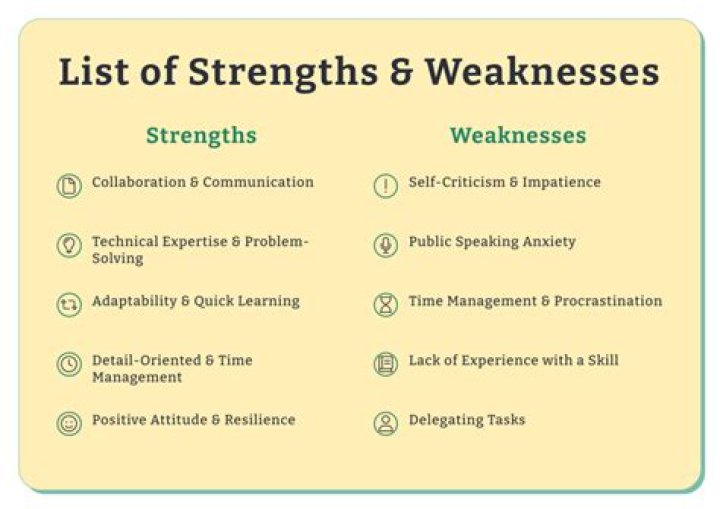
Strengths and weaknesses are internal to your company—things that you have some control over and can change. Examples include who is on your team, your patents and intellectual property, and your location. Opportunities and threats are external—things that are going on outside your company, in the larger market.
How is SWOT analysis used in risk management?
SWOT analysis identifies any opportunities for the project that arise from organizational strengths, and any threats arising from organizational weaknesses. The technique is particularly useful for identifying internally-generated risks arising from within the organization.
How do you identify risks and opportunities?
5 steps for an effective risk & opportunity identification process in the organization
- Step 1: Risk Identification. In order to identify risk, so-called risk based thinking has to be used.
- Step 2: Risk Analysis.
- Step 3: Risk Evaluation.
- Step 4: Risk Treatment.
- Step 5: Risk Monitoring and Review.
What are the strengths and weaknesses of risk management?
You may never be able to completely limit risk. Another major strength out of risk management, is that it often allows you to think of opportunities to help improve your project. Risk goes hand in hand with opportunity.
How to do a SWOT analysis for risk identification and risk?
In the same blog, Harry recommends the following procedure for efficiently carrying out SWOT analysis for risk identification and management. For the strengths, brainstorm corresponding strength and record them. Analyze and collect suitable strengths. Prioritize strengths in forced rank order or the nominal group method.
What are the strengths and weaknesses of your business?
should consider listing your delivery staff’s attitude as a strength. It is very important to be totally honest and realistic. Try to include some personal strengths and characteristics of your staff as individuals, and the management team as individuals. Whatever you do, fiction! Try to take an objective look at every aspect of your business.
What are the disadvantages of risk based methodologies?
However, important disadvantages of risk-based methodologies cannot be ignored. This chapter includes a description of the strengths and weaknesses common to risk-based methodologies.