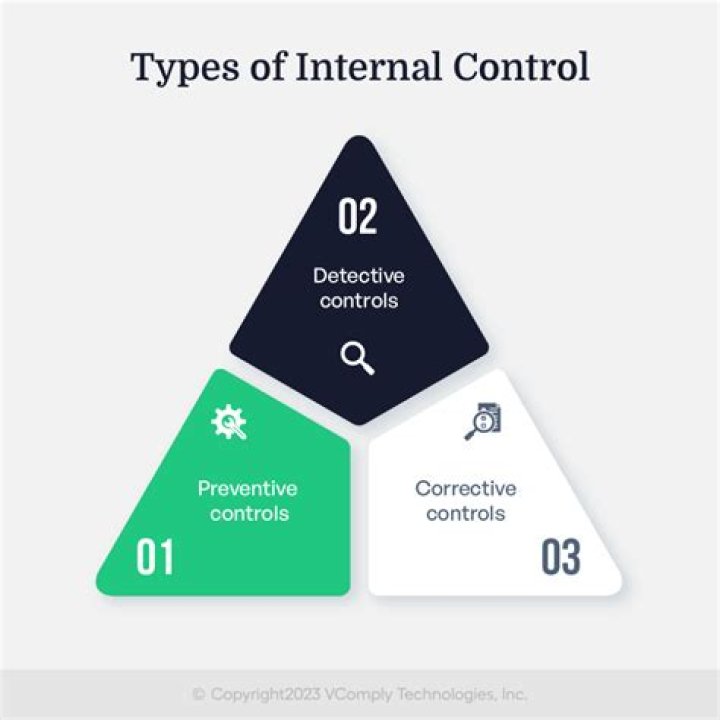
The primary purpose of internal controls is to help safeguard an organization and further its objectives. Internal controls function to minimize risks and protect assets, ensure accuracy of records, promote operational efficiency, and encourage adherence to policies, rules, regulations, and laws.
What are the 5 elements of internal control?
Internal control consists of the following five interrelated components and the seventeen principles associated with them.
- Control Environment.
- Communication (and Information)
- Risk Assessment.
- Control Activities.
- Monitoring.
What are the 5 control activities?
Control Activities
- Follow policies and procedures.
- Improve security (application and network).
- Conduct application change management.
- Plan business continuity/backups.
- Perform outsourcing.
What are the main objectives of internal controls?
Internal control should have the following objectives: Controls should be in place to ensure that processes flow smoothly and operations are free from disruptions. This mitigates against the risk of inefficiencies and threats to the creation of value in the organisation.
Why do we need focal point for internal audit?
Audit Innovation In an increasingly technology-driven, high-speed, and disruptive business environment, Internal Audit must evolve to keep up with the pace of business. Focal Point helps Internal Audit functions as they assure stakeholders, assess control environments, and anticipate technological changes in the market.
What is the meaning of focus of control?
Meaning of Focus of Control: Control is measuring actual performance, comparing it with standard performance, finding deviations and adopting measures to check the deviations.
What does it mean to focus on critical points?
Besides, this is costly and time-consuming. Managers should, therefore, focus on the critical points or areas of control which best reflect organisational goals. Poor performance in these areas indicates deviations from the standards and requires the control system. This is called the principle of critical point control.