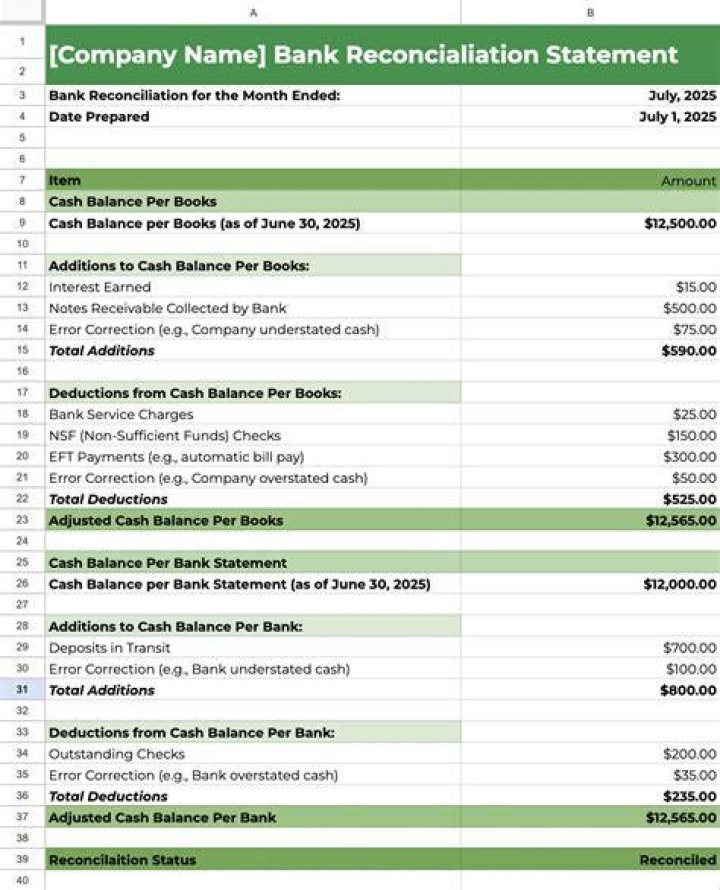
Bank reconciliations are an essential internal control tool and are necessary in preventing and detecting fraud. They also help identify accounting and bank errors by providing explanations of the differences between the accounting record’s cash balances and the bank balance position per the bank statement.
How do you know if a bank reconciliation is correct?
- Check the dates.
- Check the cashbook balance.
- Check the bank statement balance.
- Check the structure of the reconciliation statement.
- Check the outstanding items listed on the reconciliation statement.
- Check some cashbook entries.
- Check for ‘transposed’ numbers with the ‘magic number 9’
- Show you’ve been here!
Why is it important to prepare a bank reconciliation?
Reconciling your bank statements simply means comparing your internal financial records against the records provided to you by your bank. This process is important because it ensures that you can identify any unusual transactions caused by fraud or accounting errors.
What do you need to know about bank reconciliation?
Bank Reconciliation Procedure On the bank statement, compare the company’s list of issued checks and deposits to the checks shown on the statement to identify uncleared checks and deposits in transit. Using the cash balance shown on the bank statement, add back any deposits in transit. Deduct any outstanding checks.
What happens when two balances do not reconcile?
If the two balances do not reconcile then either there is a mistake in the preparation of the bank reconciliation accounting or there are errors in the cash book or errors on the bank statement which then need to be investigated.
When to reconcile bank statement with general ledger?
Most business accounts are set up to run monthly, though some older accounts may have a mid-month end date. If that’s the case, the statement can still be reconciled, you’ll just have to run a general ledger report ending on the same day as the bank statement.
When to include an adjustment on a reconciliation statement?
The first question to be considered is whether the error has been made by the entity or by the bank. If the error has been made by the entity, an entry must be made in the ledger. If the error has been made by the bank, an adjustment will be included on the reconciliation statement.